
Understanding food science
As we will discuss in class, ensuring that students, from K-12 to college, are science-literate is now recognized as one of the more important missions of our schools and universities. Given all the issues we’ve discussed this semester, a list that includes organic foods, GMOs, food safety, obesity, climate change, and allergens, one can argue that food science literacy is particularly relevant. Obviously, COVID-19 and vaccines were among the most important issues of recent years, and science distrust and misunderstanding have also been discussed.
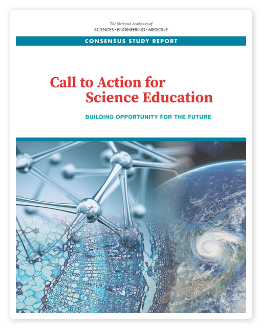
Indeed, so important is this topic that the prestigious U.S. National Academy of Sciences now regularly convene workshops to address Food Literacy. Here are the proceedings (down-loadable for free) from 2021.
There were plenty of opinions on how to promote food literacy, from childhood education to training physicians. Perhaps one of the main challenges was stated by one author as “how to deliver knowledge to people whose lives are too busy for them to take on any more chores”.
Credible food-in-the-news stories are published every day on-line and in print newspapers and magazines. Yet the number of people who actually read those articles is probably a small percent of those that read or “hear about” what some “influencer”on social media has to say. This is the challenge in a nutshell.
Communicating food science on the Big Screen
When I was in college, I don’t think I ever saw a movie about food (and I saw a lot of movies). But films about foods have become increasingly popular in the past 20 or so years. Perhaps this is because food itself has somehow become a worthy subject both for filmmakers and film-goers.
There are plenty of provocative documentary films about food. Many have an obvious point-of-view, like the film we watched this week called Poisoned. Other popular documentaries this class has watched in the past include Food Evolution, Food Inc. and Supersize Me. It’s important to watch these films with a critical eye, as there are many counter-arguments that can be made contrary to the views of the filmmaker.
Of course, there are non-documentary films, with many of the latter actually about something other than food. Some of my favorites include:
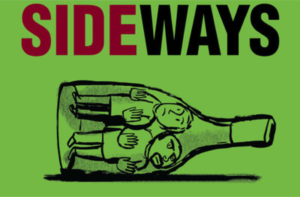
Sideways, a buddy movie, a road movie, and a love story, all told while the protagonists make their way through the California wineries and restaurants. The Director is Alexander Payne, who grew up in Omaha.
Julie and Julia, a past-and-present film about the famous TV chef, Julia Child.
Waitress, a movie about love, marriage, and pies (made into a musical play on Broadway)
Chocolat (needs no further description!)
The Hundred-Foot Journey is a great movie about restaurants and chefs. Chef and Big Night have similar themes.
In any event, I imagine you have your own list of favorite movies about food. Yes?
Communicating science? There’s an app for that!
Let’s first state the obvious: social media is how humans communicate in the 21st century. Period.
We use social media to convey personal news and information among friends and family, we use it for business and pleasure, and of course we use it in our politics.
Social media is now a major part of how we communicate science. Nearly every time I present a lecture at a conference, audience members are tweeting in real time. Indeed, I often find out about new scientific papers from twitter or email. Whereas a generation ago it would take months before an important journal article would get any attention, now it takes only a few days.
New platforms are also changing things, hopefully for the better. For example, TikTok was originally used primarily for entertainment. But according to this post on the Massive Science website, TikTok is now widely used to communicate science.
I am sure there are plenty of other examples of apps (like these), Facebook pages, websites, blogs (like this one!), or other forms of social media being use to communicate science. I would be interested to hear about those.
Image courtesy of barfblog, Doug Powell’s terrific food safety blog.
Recalls
For reasons we will discuss in class, food recalls are now a very common occurrence. As mentioned earlier during the allergens unit, most food recalls are for undeclared allergens (e.g., when soy or milk or wheat or other allergenic ingredients) gets inadvertently added to a food. While these can be serious, the recalls that get the most attention are for pathogens in foods. Even then, unless the recall is particularly widespread and causes lots of illnesses or deaths, it seems like the public hardly pays attention.
Although the FDA and USDA websites post recalls, one of the best sites for a daily check on the most current recalls is the Food Safety News website. Interestingly, it is maintained by the Bill Marler law firm (Marler Clark). There you can see that since November 1, there were several recalls due to pathogenic organisms. There was two announced just last week – for Salmonella and Listeria in fresh fruit.
For some of these, the contamination was detected before anyone got sick, but in other cases, the recall was prompted by reported illnesses. One might argue that the frequency of recalls is too high and that this means our food supply is not safe. On the other hand, it could also be argued that detection and tracing methods are now so sensitive and so fast that public health is actually better off than ever before.
This a glass half-full or half-empty kind of argument. Which side do you take?
Image from http://www.reajetus.com
When you need results yesterday
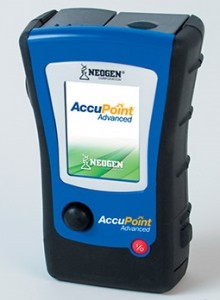
In just about every manufacturing industry, whether the products are cars, phones, or foods, it is absolutely essential that finished products meet quality expectations and safety requirements. However, for food, there is another critical requirement – namely, the methods used to validate safety must also be rapid. This is because most foods are perishable and have limited shelf-life. If a microbiological analysis takes five days for an answer before the product can be shipped to retailers, that’s five days of lost shelf-life. Thus, rapid tests that can deliver an answer in a day or less are now widely used.
Note that accuracy and sensitivity cannot be sacrificed for speed. As we know with all of the COVID-19 testing, a false negative result (e.g., when the product tests negative for the presence of a pathogen, but the pathogen is actually present) can be disastrous. Likewise, a false positive (e.g., the product tests positive, but it’s really negative) can also be costly.
Most rapid methods, as some of you will learn when you take Food Microbiology, are based on molecular or immunological principles. However, the actual tests are not very complicated, and many are as simple as a home pregnancy test. Others are a bit more technical, but can still be performed by lab techs.
Although Petri plates and test tubes are not going away tomorrow, the day is not too far away when one will simply spot a portion of food on a test strip and an accurate and reliable result will be observable in a minute or two. In fact, for some applications that day is already here. Eventually, I predict there will be smart phone apps that do the same.
Image from neogen.com

Thankful for food safety
This is the time of years when the food sections of nearly every newspaper and food website will contain articles on food safety and tips to make sure your holidays are disease-free. No matter, the odds are that there will be plenty of day-after stories of people eating under-cooked turkey, raw oysters, or some other ill-prepared or contaminated food.
One of the questions we will address is who exactly is responsible when these foodborne disease outbreaks occur. Is it the consumer who may not have followed the instructions? Or is it the manufacturer, processor, restaurant, or retailer who sold contaminated foods? What about the government who is supposed to keep us safe?
Another issue we will discuss concerns the issues of safety and the level of risk we are willing to assume. Can foods ever be 100% safe? What level of exposure is reasonable? If the government said no food (raw or otherwise) could contain any Salmonella or Campylobacter, none of us will be eating turkey next week.
For real
During the next lecture, I will describe another way to correct a dysbiotic gut microbiome. It’s a rather unconventional medical practice now being used to treat antibiotic-resistant Clostridioides difficile infections. This organism, called “C. diff” in the popular press, causes a truly miserable disease. Patients who have this organism in their gut can be chronically ill, with a terrible quality of life. In severe cases, the infection can be so bad that removal of the colon is sometimes the only remedy.
A few years ago, a handful of medical researchers developed a novel idea – why not replace the gut microbiota of these C. difficile patients with gut contents from healthy donors. When I say “gut contents” you should realize that I am referring to poop. Guess what? It works. As a matter of fact, these so-called Fecal Microbiota Transplants (FMT) work great, with reported success rates of 90% or higher.
Scientists have created fecal banks – collections of gut bacteria from donors that can be stored away and used to treat patients without having to round up fresh material. They are like blood banks. There are even “do-it-yourself” kits and with websites that have detailed instructions. So popular is this treatment, it’s been described in YouTube videos and in how-to books. Needless to say, I do not recommend the DIY approach.

The $180 gut microbiome
We will start a new unit this week – on probiotics and prebiotics. But the larger context is really about gut health, and the microbes that reside in your intestinal tract. We’ll be considering questions like how they get there, their role in various diseases, and how to shift the microbial population to promote better health. Of course, before trying to change your gut bacteria, it might help to know what’s actually there. Doing so is not as difficult as you might think. In fact, if you have $99, you can have your gut analyzed and get a profile of your very own microbiota.
So far, thousands of people have joined what was originally called the “American Gut Project”, but is now the Microsetta Initiative. It’s very easy to participate – they send you a sample kit, you collect the sample, mail it back, and wait for the results. All for $180. They gave a deal for 4 tests so you can check your microbiota over time. Several other companies are doing the same and even suggesting diets and “personalized nutrition” advice.
One has to be careful, however, about interpreting the data. For example, how would you react if you learned you were harboring bacteria associated with particular diseases? Bioethicists are also concerned about privacy issues. Nonetheless, collecting data from thousands of people is great for scientists who are studying the gut.

Gut Health: Hype, Hope, and Science
Despite the promise and potential of probiotics and prebiotics for improving human health, there is also way too much hype. From “cures” for diseases, to anti-aging, to weight loss, to improved virility, these products are promoted for just about anything and everything. For lay consumers, it is hardly possible to sort out claims supported by science from those intended simply to make money.
It’s even challenging for physicians to figure out which products are backed by science and which ones they can recommend to patients. Now we are seeing some push-back. This article in the New York Times from 2018 is a case in point. The writer notes potential benefits for probiotics, but then suggests that most studies fail to provide evidence that they work. While I and others disagree with this assessment, it’s true that not every study shows improvement. Of course , that’s the nature of clinical science.
So how and where should consumers and health practitioners go to obtain accurate and unbiased information on probiotic, prebiotics, and gut health? Of course, universities are a good start, but not many have gut health programs or maintain websites devoted to providing this information. You are fortunate that the Nebraska Food for Health Center is located at UNL, and the faculty associated with that Center conduct outstanding research and give lectures in class to convey the latest science on gut health (including FDST 280!). There are also several credible organizations that provide this information, including the International Scientific Association for Probiotics and Prebiotics (ISAPP).
Perhaps some of these products will eventually obtain FDA or EFSA-approved health claims. As noted in class, these organizations have set a very high bar for gaining health claim approval. Until then, it may not be easy for consumers to have confidence that the probiotic in their yogurt will actually improve their health.
Hey mom and dad, guess what I’m studying?
The food business has and always will be market driven. We’ve already seen this play out for several of the topics covered in this class. If consumers want organics, the industry will make and sell them. If consumers want plant-based milk and meat, an entire industry will form to produce these products. If consumers want gluten-free, then gluten-free they shall have.
These developments are great for food scientists, as this means plenty of challenging jobs in product development, sensory analysis, quality control, food analysis, and regulatory compliance.
The cannabis edibles market is the latest to emerge in food science and technology. Entire books have already been published on this topic.
A robust side industry has also formed exclusively for measuring CBD, THC, and other chemical constituents. The Institute of Food Technologists (IFT), the professional organization for food scientists has published several reviews and developed education and other materials to keep their members informed.
And right here in Nebraska, Doane University, a small liberal arts college located in Crete, became one of the first universities in the world to offer a cannabis studies program. Under the leadership of Dr. Andrea Holmes, this program has several courses on cannabis agriculture and chemistry and even and offers a professional Certificate in cannabis science.
Image from Forbes
